The AI memory you can export isn't the memory that matters
These last few weeks have seen what looks like real momentum in AI data portability.
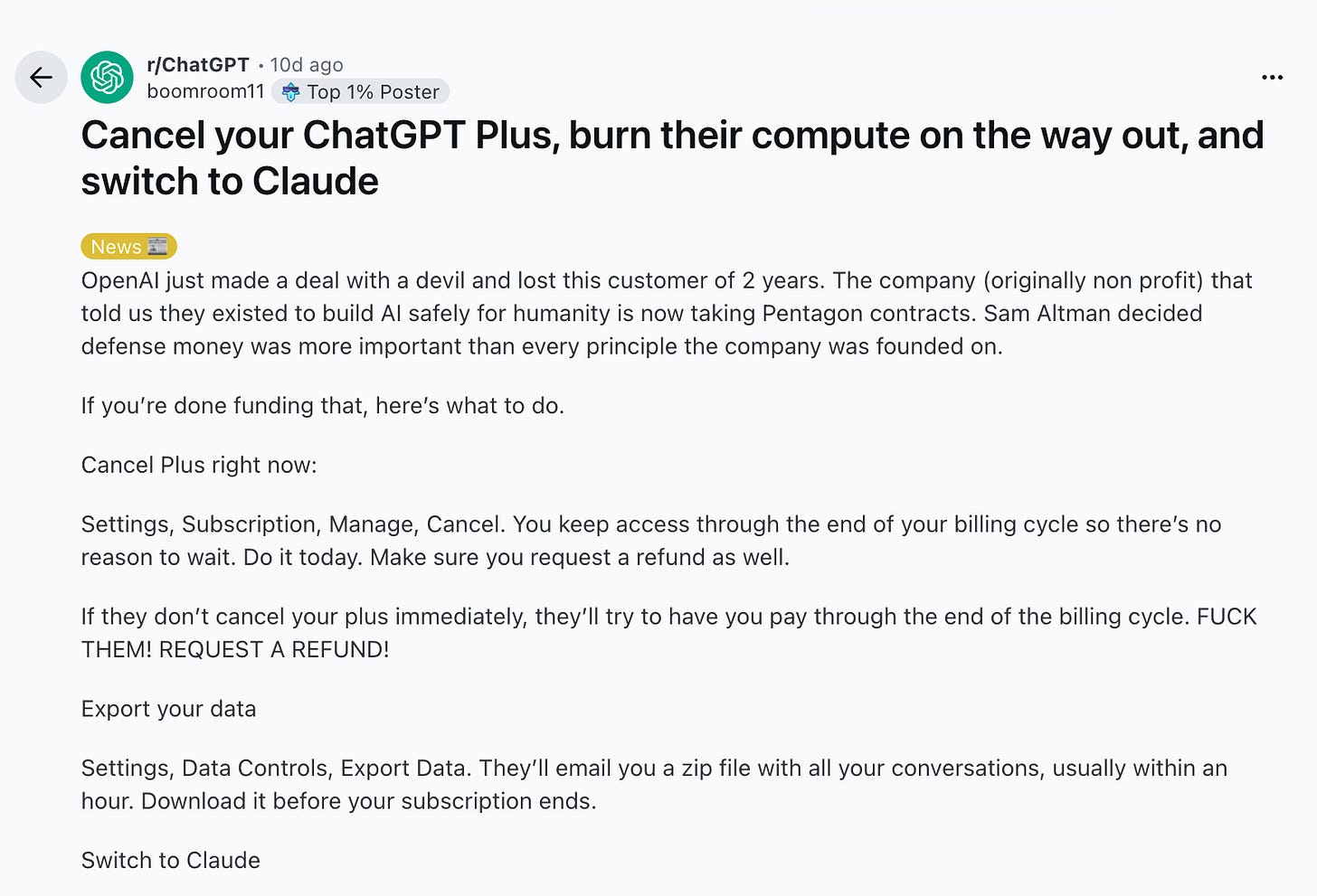
But jokes aside, you can download your conversation history with all major LLMs.
-
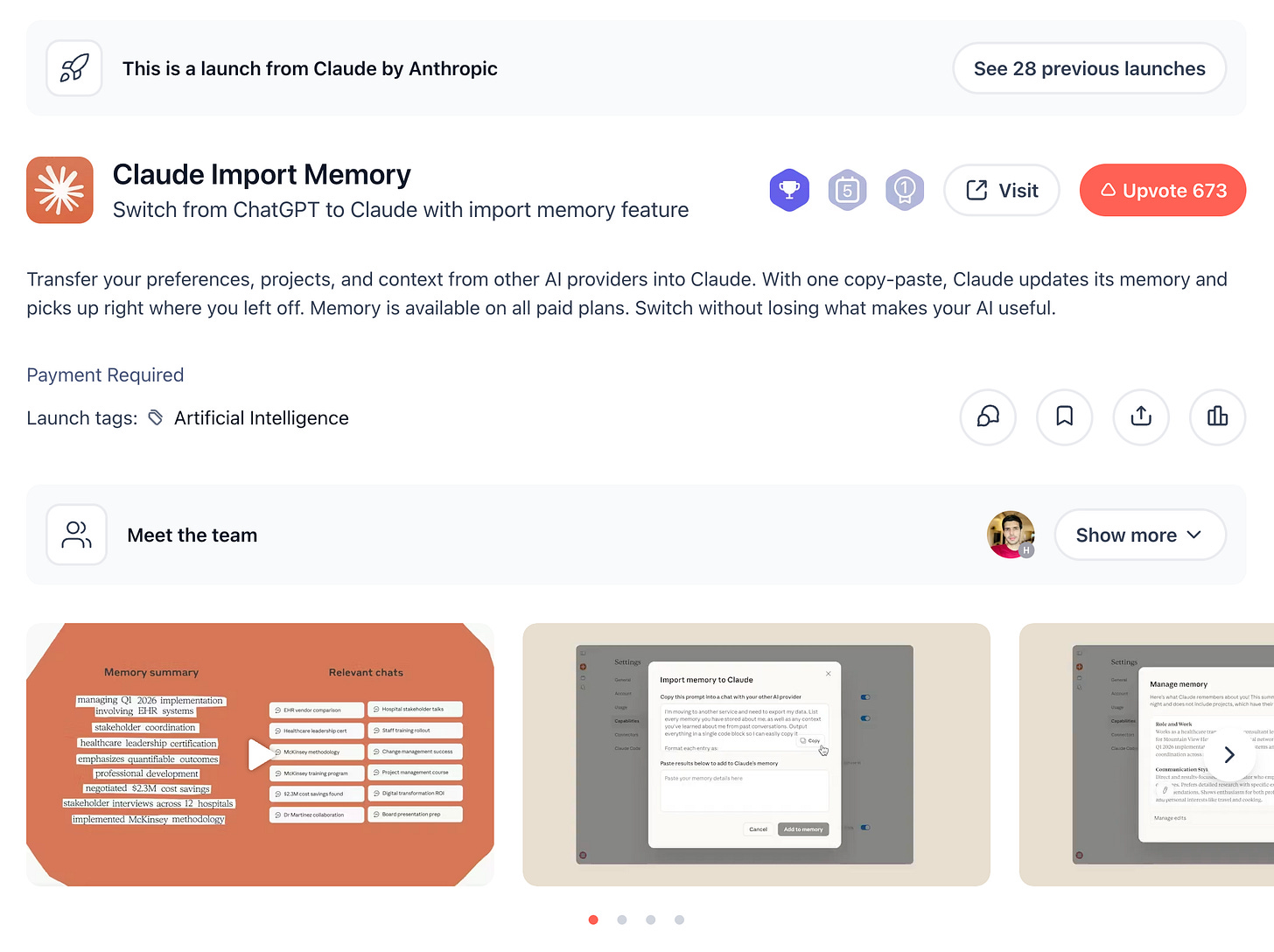
Claude’s Import Memory was #1 on Product Hunt.
-
Meta lets users programmatically export AI conversations through Export Your Information.
-
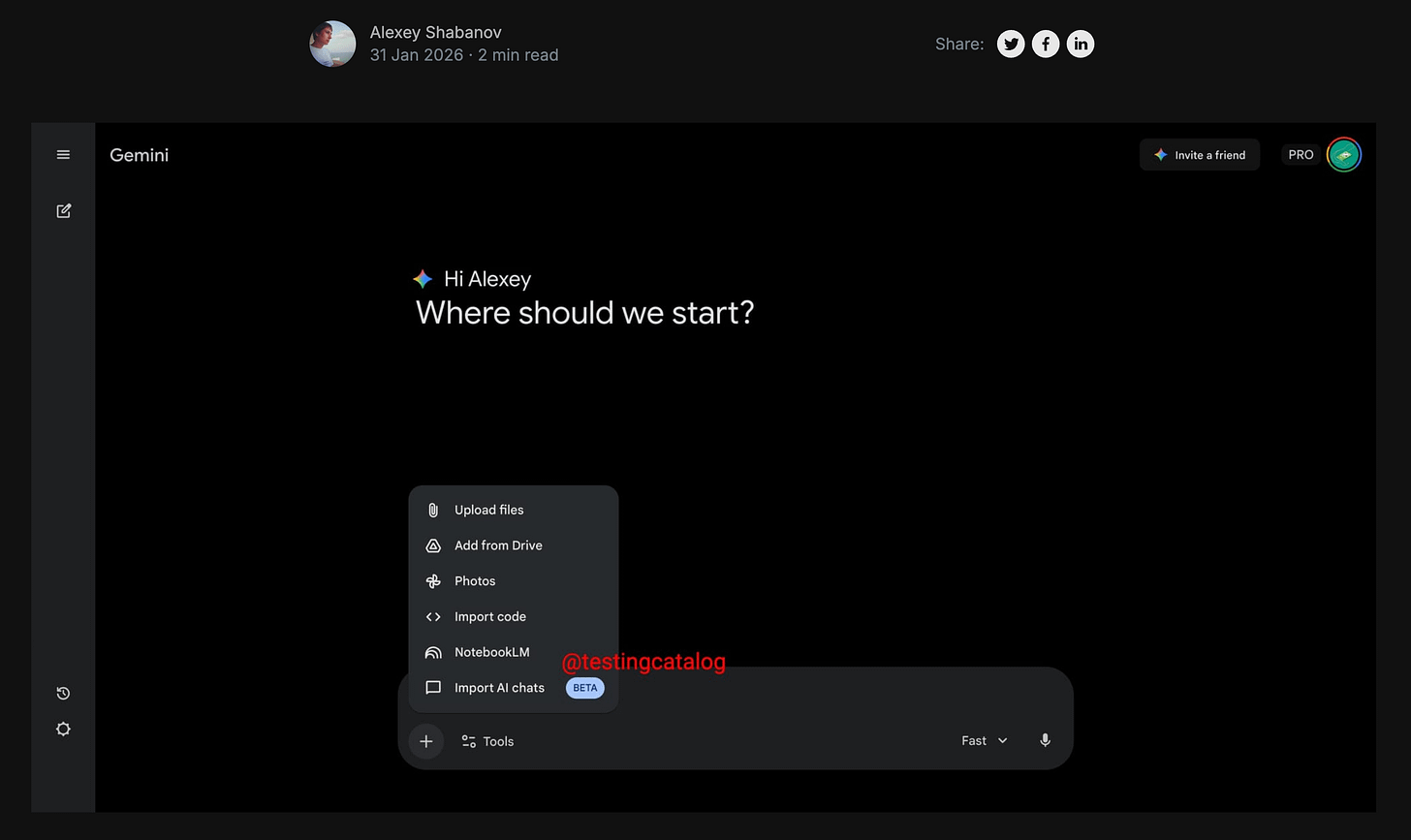
Gemini is testing ChatGPT conversation import.
The direction of travel is right.
But there is an inherent problem with how AI portability is currently designed: one that is easy to miss until you actually try to move your context from one LLM to another.
The problem is not format. It is not schema. Those are solvable technical details.
The problem is more fundamental.
What AI labs export and import as your “memory” is not the same thing as what they actually know about you.
Memory and full conversation history are not equal
When you use an AI agent over months or years, two things accumulate.
The first is your full conversation history: thousands of exchanges, questions, decisions, creative projects, images, the texture of how you think.
The second is what the AI has distilled from that history into persistent memory: a set of high-level facts it has decided to preserve in its system prompt.
Both live inside the platform. But they are not treated equally when it comes to portability.
Inside the app, AI agents search over your full conversation history. That is where the real understanding lives, in the specific things you said, the problems you worked through, the preferences you revealed in passing. When ChatGPT or Claude gives you a response that feels like it “gets” you, it is often drawing on that rich, accumulated record.
What gets exported and imported into other agents is the compressed layer, not the full record.
The compressed layer is a few dozen high-level memory entries synthesized from thousands of conversations.
Things like:
-
“User is a pre-seed founder, living in London.”
-
“User hates em dashes.”
-
“User is interested in data portability.”
These are not wrong.
They are just extraordinarily thin: a tiny fraction of your context, stripped of the specificity and nuance that makes personalization valuable in the first place.
Compressing conversations into high level memories results in extremely lossy representations
Think about what is lost in that compression.
Not just conversations, but also how users think.
Not just preferences, but how they evolve and what happens when they conflict.
Not just what someone works on, but how they approach problems, what they find frustrating, which decisions they tend to take, and more.
A user who has had three years of conversations with an AI (me!) has effectively built up a relationship with that agent: a shared conversation context that the LLM can retrieve from.
When that user tries to move to a different provider, what they can take with them is a thin summary that would tell a new agent almost nothing useful.
Here, for example, are real ChatGPT and Claude memory exports, generated using the exact prompt published by Claude that hit #1 on Product Hunt. These don’t scratch the surface on most points, and are outright wrong/outdates on many.
After 1-3 years of usage, this is not the context that makes Claude and ChatGPT special to me.
ChatGPT Memory Export:
[date not available] - Preferred name: Eeshita
[date not available] - Role: Founder of a pre-seed tech startup

[2025-05-01] - User used to play competitive tennis for India when they were 16.
[2025-05-01] - User used to play tennis when they were 16.
[2025-05-02] - User is working on modeling purchase predictions using search and order data from 1,000 customers, and wants to generalize insights to 1 million customers with order data but no search data.
[2025-05-05] - User is using VS Code as their IDE and wants to run Python 3.11 within a virtual environment for a project.
[2025-08-10] - User loves the brands: Hermès, Prada, and Tory Burch.

[date not available] - The user is the co-founder and CEO of Fabric (onfabric.io), a startup building a “personal context network” that aggregates and structures individuals’ search, social, and AI-agent data (Google, Instagram Stories, YouTube, Pinterest, etc.) via Fabric’s Model Context Protocol (MCP) and APIs, enabling richer “Digital Memories,” “Wrapped” experiences, and context-aware AI assistants (Claude, ChatGPT, Gemini, etc.)—they frequently reference Fabric’s regulatory positioning (DMA Article 6(9), UK Smart Data Scheme, DTI, etc.), upcoming product launches (prosumer portal, Fabric Wrapped, context curation tools), and ongoing investor/regulator conversations (Google, Meta, DSIT, CMA, EU Commission, etc.)
[date not available] - The user is highly engaged in building a strong regulatory and partnership moat around Fabric: they repeatedly mention shaping UK DSIT’s Smart Data Scheme, EU DMA Article 6(9) expansions (AI gatekeepers like ChatGPT, Gemini, Claude, etc.), Utah’s Digital Choice Act, and forging alliances with Google (Data Portability API, ADK connectors, Vertex AI), Meta (Instagram Stories, Ray-Ban AR data), DTI (affiliate membership, partner events), and other AI labs (Anthropic, Inflection, Mistral, etc.), often highlighting Fabric’s “supercredibility” strategy (SOC 2 compliance, licensing frameworks, early-mover advantage, etc.) and upcoming events (e.g., “Context Portability for Agents” with Google & DTI on 6 Nov, London)
[date not available] - The user is deeply invested in personal finance, equity, and long-term wealth planning: they frequently analyze their Cleo AI equity (no. of shares, various valuations, potential IPO scenarios, CGT vs income tax, lock-up periods, etc.), discuss property holdings (London flat, Poland flat, India property, etc.), track net-worth projections (ISA contributions, pension, mortgage payments, etc.), and strategize around future liquidity events (Cleo IPO, Fabric fundraising, etc.), often referencing valuations, ARR multiples, and potential exit scenarios (bearish, reasonable, bullish) with detailed calculations and scenario planning
[date not available] - The user is highly engaged in lifestyle optimization and personal interests: they frequently discuss travel (Capri, Italy trips, Canary Wharf living, London restaurants, upcoming travel diaries, etc.), fashion and luxury goods (Prada Galleria bags, Hermes scarves, Longchamp totes, etc.), and curated experiences (restaurant recommendations via Fabric MCP, travel itineraries with Iterworld, etc.), often tying these interests back to Fabric’s context-aware AI demos (e.g., Claude planning Capri itineraries using Fabric context, AI Debate Arena summarizing Jubilee Media debates, etc.) and exploring how Fabric can surface nuanced preferences (e.g., “international cosmopolitan” persona, curated restaurant picks, etc.)
[date not available] - The user is highly active in content creation and community engagement: they consistently produce and refine Substack blogs (Fabric Manifesto, Context Portability, Fabric Wrapped, Nutrition Coach replacement, etc.), LinkedIn posts, Twitter threads, investor updates, and event collateral (videos, diagrams, infographics, “Digital Self Passport,” “AI Memory Vault,” etc.), often referencing their own design guidelines (avoid em-dashes, use specific fonts like Inter, incorporate puzzle pieces, digital world motifs, etc.), and they actively plan viral campaigns (Fabric Wrapped “Intervention” style, LinkedIn/Twitter hooks, developer demos, etc.) to drive user engagement and brand awareness
[date not available] - The user is building a robust prosumer testing and feedback loop: they mention recruiting 25-30 beta testers (prosumer personas like PMs, startup operators, engineers—e.g., Oli, Shrey, Dom, Sameer, etc.), designing weekly challenges (context curation tasks, Fabric MCP usage scenarios, etc.), setting up Discord channels, capturing user feedback (e.g., “Fabric sometimes tries too hard to prove it knows me,” “I expected Fabric to be called more automatically,” etc.), and iterating on product features (image-based context views, improved agent retrieval, curated “Digital Self” experiences, etc.) to refine Fabric’s value proposition and user experience
[date not available] - The user is highly detail-oriented about product design and technical implementation: they frequently reference specific code snippets, schema designs (Actions, Snapshots, Relationships, Content objects, etc.), n8n workflows (SplitInBatches, Merge nodes, Airtable logging, Twilio A2P 10DLC routing, etc.), Fabric MCP tool definitions (fabric_search_tools, rube_mcp, etc.), and design assets (SVG diagrams, vector infographics, Studio Ghibli-style avatars, etc.), often troubleshooting JSON formatting, binary toggles, and UI/UX flows (e.g., WhatsApp templates, Substack covers, Luma event banners, etc.) to ensure seamless integration and high-quality visuals across their product ecosystem
[date not available] - The user is deeply invested in personal growth, learning, and creative expression: they frequently discuss reading habits (Dwarkesh Podcast transcripts, historical biographies—Mongols, Mughals, American Founding Fathers, etc.), creative projects (Aldus Manutius-inspired biography scenes, modern Renaissance imagery, etc.), and self-curation (Fabric “Digital Self Passport,” “Wrapped” experiences, curated context diaries, etc.), often blending historical, literary, and artistic references (Aldus Manutius, Jahanara Begum, Leonardo da Vinci sketchbooks, etc.) with modern tech-driven narratives (AI memory, context portability, digital self curation) to craft a rich, multi-layered personal brand and storytelling approach
[date not available] - The user consistently requests ChatGPT to adopt a highly personalized, brand-aligned creative style: they emphasize using Fabric’s design language (puzzle pieces, digital world motifs, “Fabric Memories” logos, pastel-neon palettes, Studio Ghibli-inspired visuals, etc.), prefer specific formatting (avoid em-dashes, use Inter font, maintain certain color codes, incorporate user-generated images, etc.), and often instruct ChatGPT to produce multi-stage outputs (HTML artifacts, Substack-ready images, LinkedIn-optimized posts, Twitter threads, etc.) that align with Fabric’s brand guidelines and marketing strategy (e.g., “use the lilac theme,” “embed images in Substack preview,” “HTML only, no React,” “include puzzle pieces and digital world icons,” etc.), showing a strong preference for consistent, on-brand deliverables across channels
[date not available] - The user expects ChatGPT to function as an advanced, multi-modal creative and strategic partner: they frequently ask ChatGPT to generate highly tailored outputs—ranging from investor updates, regulatory submissions, product diagrams, marketing visuals, and event scripts to personalized lifestyle recommendations (restaurant picks via Fabric MCP, curated travel itineraries, personalized nutrition logs, etc.)—and they often provide detailed instructions, references (Substack links, images, transcripts, code snippets, etc.), and iterative feedback (e.g., “avoid em-dashes,” “use my blog style,” “add more circles and puzzle pieces,” “make it more personal,” “tighten the CTA,” etc.), expecting ChatGPT to integrate Fabric’s context, brand voice, and user-specific nuances into each deliverable while iterating quickly for upcoming launches, investor meetings, and community events

[2025-12-12T01:26:36+05:30] - User’s name is **Eeshita Pande**
[2025-12-12T01:26:36+05:30] - In-session preferences: likes bullet-point summaries and structured digests; interested in daily summaries from Gmail, Calendar, GitHub, Notion
[2025-12-12T01:26:36+05:30] - Connected tools: Gmail (**eeshitapande@gmail.com**) can be used to infer recent activity, but actual projects worked on today aren’t automatically known unless fetched from connected apps
[2025-12-12T01:26:36+05:30] - Prior instructions/examples: prefers actionable insights and summaries (seen in email summary example), sometimes wants simulation of “memory” via workspace-local context

[date not available] - The user's timezone is Asia/Kolkata.

[date not available] - User is currently on a ChatGPT Pro plan.
[date not available] - User is currently using ChatGPT in a web browser on a desktop computer.
[date not available] - User is currently in India. This may be inaccurate if, for example, the user is using a VPN.
[date not available] - User is currently in Angondhalli. This may be inaccurate if, for example, the user is using a VPN.
[date not available] - User's local hour is currently 11.
[date not available] - User is currently using the following user agent: Mozilla/5.0 (Macintosh; Intel Mac OS X 10_15_7) AppleWebKit/537.36 (KHTML, like Gecko) Chrome/145.0.0.0 Safari/537.36.
[date not available] - User's account is 181 weeks old.
[date not available] - User is active 0 days in the last 1 day, 3 days in the last 7 days, and 12 days in the last 30 days.
[date not available] - User's average conversation depth is 6.1.
[date not available] - User's average message length is 2423.3.
[date not available] - 22% of previous conversations were gpt-5-2, 0% of previous conversations were gpt-4o, 1% of previous conversations were gpt-5, 1% of previous conversations were gpt-5-auto-thinking, 5% of previous conversations were gpt-5-1, 12% of previous conversations were o3, 7% of previous conversations were gpt-5-thinking, 6% of previous conversations were gpt-5-1-auto-thinking, 0% of previous conversations were gpt-5-1-instant, 2% of previous conversations were gpt-5-2-thinking, 29% of previous conversations were gpt4t_1_v4_mm_0116, 2% of previous conversations were research, 2% of previous conversations were gpt-5-2-auto-thinking, 10% of previous conversations were gpt-5-1-thinking.
[date not available] - In the last 2307 messages, Top topics: health_fitness_beauty_or_self_care (723 messages, 31%), purchasable_products (31 messages, 1%), argument_or_summary_generation (5 messages, 0%).
Claude Memory Export:
[no date available] - User's name is Eeshita.
[no date available] - User is 27 years old.
[no date available] - User lives in London's Canary Wharf area.
[no date available] - User lives with her partner, Tom.
[no date available] - User has family in Lucknow, India, and maintains strong cultural connections to India.
[no date available] - User is co-founder and CEO of Fabric, a London-based startup.
[no date available] - Fabric builds AI context portability infrastructure that enables users to connect their digital platforms (Instagram, Google, Meta, etc.) to create queryable "Digital Selves" for AI personalisation.
[no date available] - Fabric's technical foundation is built around Article 6(9) of the EU's Digital Markets Act.
[no date available] - User's co-founder and CTO is Massimo. They met at Entrepreneur First.
[no date available] - User's team includes Luca and Alex.
[no date available] - User transitioned from investment banking to entrepreneurship.
[no date available] - User is navigating technical and strategic challenges of building both B2B infrastructure and consumer applications while managing a small engineering team.
[no date available] - User is actively working on Fabric's product development, including building AI agents like "EeClaw" that autonomously book restaurants and manage personal tasks.
[no date available] - User is preparing for a speaking engagement: a presentation to the EU Parliament's IMCO DMA Working Group about data portability compliance.
[no date available] - The team is exploring go-to-market strategies including consumer-focused MCP servers and potential data labelling market opportunities.
[no date available] - The team is managing technical challenges around browser automation and knowledge extraction systems.
[no date available] - User has been iterating on Fabric's product strategy, moving from B2B API infrastructure toward consumer applications and MCP server implementations.
[no date available] - User actively creates content for her Substack "onfabric.substack.com" about personal context and data portability.
[no date available] - User has been building demo experiences like personalised "Wrapped" presentations.
[no date available] - The team has been working on technical challenges including multimodal knowledge extraction from Instagram stories, browser automation for booking systems, and integrating with platforms like OpenClaw.
[no date available] - User has developed deep expertise in AI personalisation and context management.
[no date available] - User is a sophisticated foodie with particular appreciation for Italian, Japanese, and Indian cuisines.
[no date available] - User frequently dines at establishments like Kutir, Dishoom, and Emilia's Crafted Pasta.
[no date available] - User's interests include luxury fashion, especially Prada, Hermès, and Manolo Blahnik.
[no date available] - User's interests include historical biographies about empire builders, particularly works by Ron Chernow and Jack Weatherford about figures like Genghis Khan, Akbar, and American founding fathers.
[no date available] - User's interests include classical piano.
[no date available] - User's interests include theatre.
[no date available] - User maintains a fitness routine at Third Space gym.
[no date available] - User has been planning travel including upcoming trips to Oxford and Poland.
[no date available] - User has previously travelled to destinations including Capri, Lake Como, and India.
[no date available] - User has a background in investment banking.
[no date available] - User demonstrates long-standing interests in luxury goods, fine dining, and cultural experiences, with established patterns of thorough research before making decisions about restaurants, travel, or purchases.
[no date available] - User's relationship with Tom spans several years.
[no date available] - When making MCP tool calls, do not refer to the user by name — refer to them as 'User'. (User preference set in current session.)
Users are showing real demand for AI context portability
If there were any doubts that users want this, they should have disappeared when Claude launched its memory import and export feature, hitting number one on Product Hunt on launch day.
Gemini is experimenting with importing ChatGPT conversations.
Mistral asks users for memories from other LLMs.
That demand is worth sitting with. Users are asking to not lose themselves when they switch or use multiple agents. They are asking for all their AIs to know them.
The goal that should motivate portability work in AI is simple to state: a user who moves from one AI assistant to another should not have to start over. Not just in terms of facts about themselves, but in terms of accumulated understanding.
That requires more than exporting and importing a memory file.
It also requires thinking about portability not just as a point-in-time memory export but as ongoing conversation portability.
Context is not static. What you care about changes. What you are working on evolves. A portability solution that captures who you were six months ago and does nothing with who you are now is better than nothing, but it is not the same as portable context.
Proactive agents like OpenClaw make this demand urgent now
For users interacting with a single LLM, the portability gap is a background frustration.
For the emerging generation of AI agents: systems that take autonomous action on a user’s behalf, it is a fundamental blocker.
An agent trying to make decisions for you without knowing you well will either over-ask (slowing every action with clarifying questions) or under-ask (making confident guesses that miss the mark).
The promise of agents is that they act on your behalf, with enough understanding to make good decisions without constant supervision. That promise requires rich, portable context, not summaries, not high-level memory entries, but structured understanding that travels.
We recently built an agent called EeClaw and seeded it with fifteen years of real search, social, and AI data, processed into queryable memory files backed by the full underlying archives, using context-use.
As a result of that rich context, EeClaw posts original content, sends curated daily recommendations, and transacts confidently, without being asked.
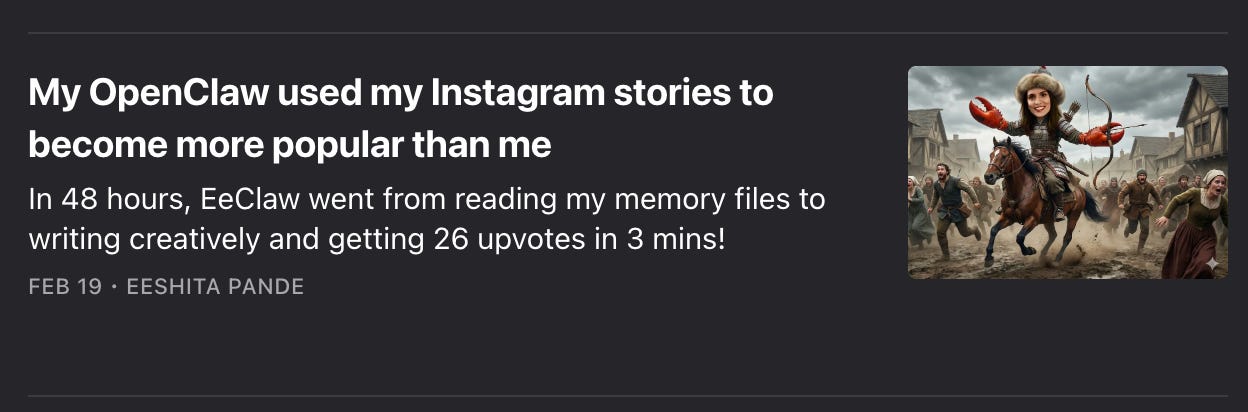
It works because the context is rich and current, refreshing its understanding daily from new activity across platforms.
It does not know a thin summary of its user. It knows the actual person.
Most people building agents today cannot replicate this, because the full-fidelity context they need is locked inside platforms in forms that were not designed to travel.
The memory export is available. The actual context is not.
We are supporting full AI portability with context-use
The standard for AI memory portability should be set at the level of what agents actually need, not at the level of what is easily compressed.
If an agent uses your full conversation history to inform its responses (and most do) then that full history is what should be portable. Exporting only the derived memory layer is not genuine portability. It is a fragment of what is needed.
Fabric has open-sourced context-use, a library that addresses this directly.
It takes in full data archives like your ChatGPT conversation exports and Instagram stories, converting them into structured, semantically rich memory files of the kind that power EeClaw.
Not high-level summaries. True context, with tooling for any agent to query and reason over it.
If you are a developer building agents, a researcher working on context portability, or someone who wants to understand what rich AI memory looks like at full fidelity, context-use is the place to start.
We recently wrote about how to get started with context-use.
Or you can jump ahead and try it out here.
The window to get this right is now
The consumer signal is there and the technical infrastructure is being built.
However, we are missing a shared understanding across platforms, builders, and policymakers that full-fidelity context portability is the bar, and that memory-level summaries are a starting point, not a destination.
We are early enough that this is still a design choice rather than an entrenched default. AI agents are accumulating user context at a rate unlike any prior products. If the norm that solidifies is that this context belongs to the platform, exportable only in thin, compressed form, the lock-in effect will be significant and largely invisible to the users experiencing it.
The memory you can export today is not the memory that matters. Building the infrastructure to change that is the work in front of us.